

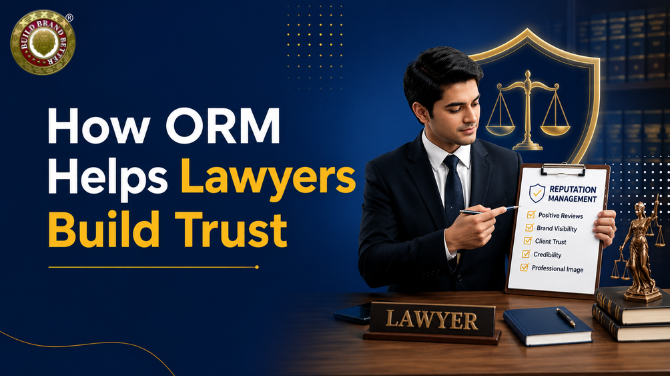
Most lawyers spend years building a practice and almost no time thinking about what shows up when someone Googles their name. Then one day, a client leaves a bad review, or an old article resurfaces, and suddenly it matters a lot.
Here’s the thing. Close to 98% of people read reviews before they hire a lawyer. Not “a lot of people.” Almost everyone. You can have twenty years of experience and a wall full of case wins, but if the first thing someone sees online is a one-star review from 2021, a good chunk of them won’t even bother reading the rest of your bio. They’ll just move to the next name on the list.
This is what online reputation management for lawyers is actually about. Not flashy marketing, not fake reviews, just making sure the internet tells the truth about you and tells it first.
Why does this hit lawyers differently than other professions?
A restaurant gets a bad review because the soup was cold. A lawyer gets a bad review because someone lost custody of their kid, or got a longer sentence than they hoped for, or didn’t win a case that maybe couldn’t have been won by anyone.
That’s a different kind of problem. Clients come to lawyers during the worst stretch of their life, divorce, arrest, bankruptcy, or a death in the family that triggered some legal mess. Even when you do everything right, the outcome can still feel like a loss to them. And people who feel like they lost something are far more likely to go online and vent than people who quietly walked away satisfied.
So you end up with this odd imbalance. The unhappy client writes three paragraphs on Google at midnight. The happy client, the one whose case actually went well, never thinks twice about leaving a review. Nobody reminds them to.
That gap is exactly where reputation management for attorneys comes in.
What the data actually shows?
Here’s what the numbers say about how much this stuff actually moves the needle for a law firm.
| Statistic | What it means for lawyers |
| 98% of potential clients read reviews before hiring a lawyer | Your reviews are the first conversation you have with almost every client, and you’re not even in the room for it |
| 80% check attorney reviews specifically before hiring | Skipping this step means skipping where most clients actually start |
| 49% trust online reviews as much as a friend’s recommendation | A stranger online now carries close to the same weight as someone’s cousin who “knows a guy” |
| 88% are more likely to hire a firm that responds to reviews | Staying quiet costs you clients, even when the review was good |
| 71% of people will revise a negative review after a thoughtful reply | A calm response can undo a chunk of the damage |
| 94% say one bad review made them avoid a business entirely | One unanswered complaint can quietly turn away dozens of leads you never even see |
| 70% will travel further for a lawyer with better reviews | Reputation can now beat location, which used to be the deciding factor in legal hiring |
That 94% number is the one that should worry you a little. One review, sitting there unanswered, is doing real damage every single day it stays up.
So what does this work actually involve
People hear “reputation management” and picture something vague and PR-ish, like a press release machine. It’s really not that. It’s a handful of specific things, done consistently.
- Watching what’s already out there.
You search for your own name, your firm’s name, and every attorney’s name in incognito mode so Google isn’t tailoring results based on your search history. You check Google, Avvo, Yelp, Glassdoor, LinkedIn, and whatever directories your clients are likely to look at. Most lawyers have never actually done this. Try it today, and you might be surprised, for better or worse.
- Responding to reviews.
All of them, not just the bad ones. A thank you on a good review takes thirty seconds and shows people you’re paying attention. A reply to a bad review is harder, obviously, but it’s also where the real work is. The trick is staying calm and professional without confirming anything about the actual case, because client confidentiality rules don’t go away just because someone wrote something unfair about you online.
- Asking happy clients for reviews.
This sounds almost too simple to matter, but it’s the single biggest lever most firms ignore. A short text after a case wraps up, something like “if you have two minutes, a review would help us a lot,” changes the math more than people expect. Firms that build this into their normal workflow end up with way more positive reviews, not because they’re better lawyers, just because they actually asked.
- Getting rid of content that shouldn’t be there.
Sometimes a review is fake. Sometimes it’s posted by someone who was never even a client. Sometimes it leaks information that should’ve stayed private. In those cases, the move is filing a formal removal request with the platform, backing it up with evidence, and following up until it actually comes down, which can take a while. When something can’t be removed, the fallback is pushing it down in search results by building up enough good content to outrank it.
- Making sure your name shows up the way it should.
This is the long game part. SEO, an active Google Business Profile, real content about your actual work, all of it adding up so that when someone searches your name, what they find first is accurate and current, not a stale article from six years ago.
The confidentiality wrinkle nobody else has to deal with
Here’s where lawyers have it harder than basically any other reviewed profession. A restaurant owner can reply to a bad review by explaining exactly what happened that night. A lawyer can’t.
Bar rules around client confidentiality don’t bend just because a review feels unfair. You generally can’t confirm someone was your client, can’t share case details, can’t even really defend yourself with specifics, even if the review is flat-out wrong. That means every single response has to be written carefully: acknowledge, stay professional, give nothing away. A copy-paste response template that works fine for a dentist’s office can get a lawyer in real trouble.
This is also why a lot of firms quietly avoid responding to negative reviews at all. They’re not lazy, they’re nervous about saying the wrong thing. Which is understandable, but it’s also exactly the gap that pushes clients toward whoever responds well.
How long before you actually see something change?
Fair question, and one that comes up constantly. There’s no overnight fix here, but there is a rough timeline based on how this kind of work usually plays out.
| Timeframe | What usually happens |
| 1 to 3 months | Small shifts in search rankings, early signs of sentiment changing |
| 3 to 6 months | A real, visible change in what comes up on page one for your name |
| 6 to 12 months | Old negative content largely buried or removed, search presence rebuilt |
It’s also not something you do once and forget. New reviews keep coming in, old content can resurface, and competitors keep publishing. A firm that builds a clean reputation and then stops paying attention can drift right back to where they started within a year, sometimes faster.
Solo lawyers and small firms have more riding on this, not less
A big firm with fifty attorneys can absorb one bad review somewhere in the noise. A solo practitioner can’t really hide from it, because their name and the firm’s name are basically the same thing in a client’s head. One bad search result doesn’t just hurt the firm’s image; it follows the actual person, even years later, even after they’ve moved practices entirely.
The upside, weirdly, is that solo lawyers and small firms tend to see results faster. There’s less existing content competing for space, so a focused push on reviews and search visibility can shift things in a few months instead of a year.
Where Build Brand Better fits into this
This is the part where we will mention the company behind this blog, because it’s relevant, not just because we want the plug. Build Brand Better works with lawyers and law firms on exactly the things covered above, monitoring reviews across Google, Avvo, Glassdoor, and the rest, responding to feedback in a way that doesn’t create new problems, and removing or pushing down content that shouldn’t be ranking against an attorney’s name in the first place.
The legal side of this work has its own rules, and that’s something Build Brand Better treats seriously. Review responses are written with confidentiality in mind, not just to sound polished. SEO work is aimed at getting real case results and credentials in front of people, not generic filler. And the monitoring runs continuously, because, as covered above, this isn’t a one-time fix.
With over 1200 clients handled across India and beyond, including plenty of work in sensitive, reputation-heavy fields, the team has a sense for how this plays out specifically for legal professionals, not just businesses in general.
What things can you actually do ?
You don’t need a six-month plan to start. A few of these take fifteen minutes.
- Search your own name and your firm’s name in an incognito window. See what an actual stranger sees, not what your personal browsing history shows you.
- Open your Google Business Profile and check that it’s claimed, current, and not missing basic info.
- Go reply to your three most recent reviews right now, good or bad, doesn’t matter.
- Think of five recent clients with decent outcomes and send each one a short message asking for a review.
- If you spot a fake or clearly inappropriate review, start the platform’s removal process today instead of letting it sit.
If you’ve already looked and the problem feels bigger than something you can chip away at on your own, that’s usually the point where it makes sense to bring in people who do this full-time. You can look at Build Brand Better’s reputation management services or just reach out for a free consultation and get an honest read on where things actually stand for your name online right now.
