

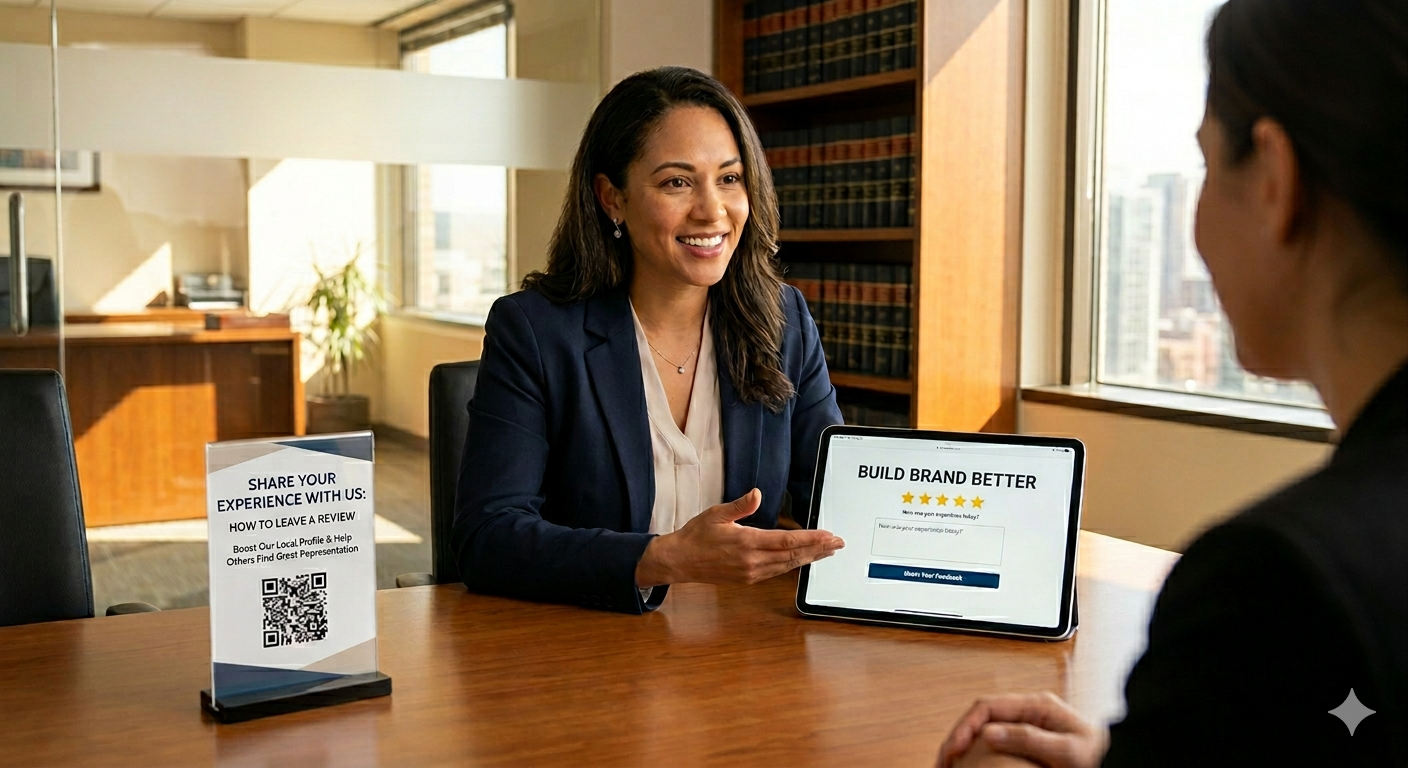
Managing law firm reviews involves improving your Google Business Profile (GBP), building a system to routinely request feedback upon case closure, and responding professionally to all reviews. Most people searching for legal help begin online, comparing firms, reading reviews, and looking for signs they can trust. For small law firms, this makes online review management more than just a marketing task — it becomes part of building credibility. A few well-managed reviews can consistently bring in new clients, while ignored feedback can quietly push potential clients toward competing firms.
Table of Contents
Why Reviews Matter for Small Law Firms
Unlike large firms that already have strong brand recognition, small law firms rely heavily on trust and personal reputation. Online reviews act as modern-day word-of-mouth recommendations. They influence how your firm appears in local search results and often shape a client’s first impression before any consultation takes place.
Many potential clients compare multiple law firms before making a call, and reviews frequently become the deciding factor. A firm with genuine positive feedback and thoughtful responses appears more approachable and reliable than one with outdated or unanswered reviews.
Search engines like Google Business Profile also consider review activity when ranking local businesses. Firms that actively respond to feedback tend to appear more engaged and trustworthy online.
Where You Should Monitor Reviews
Before improving your online reputation, you need to know where clients are talking about your firm. Focus on regularly monitoring these platforms:
- Google Business Profile — Most important for local visibility and search rankings
- Avvo — Popular legal directory used by people searching for attorneys
- Yelp — Still widely checked for service-based businesses
- Facebook — Useful if your firm maintains an active social presence
- Justia and Lawyers.com — Legal directories that can influence credibility and search visibility
Checking these platforms consistently helps you respond quickly and identify patterns in client feedback.
How to Ask Clients for Reviews
Timing matters when requesting reviews. The best moment is usually after a case has been successfully resolved and the client feels satisfied with the outcome and communication process.
You can make the process easier by adding a review link to your follow-up emails or thank-you messages. If a client personally compliments your service, politely asking them to share their experience online often feels natural rather than promotional.
However, it is important to stay ethical. Never pressure clients, offer incentives, or provide scripted responses for reviews. In the legal profession, authenticity matters, and overly controlled reviews can damage trust instead of building it.
Responding to Positive Reviews
Positive reviews should never be ignored. A short, genuine response shows appreciation and demonstrates that your firm values client relationships.
Instead of posting the same generic reply every time, personalize each response slightly. Mention gratitude, acknowledge the client’s kind words, and reflect the values your firm stands for. Even a simple response can leave a strong impression on future clients reading through your reviews.
In many cases, your response matters just as much as the review itself because prospective clients are evaluating how your firm communicates with people.
Handling Negative Reviews Calmly
Negative reviews are uncomfortable, but they are also an opportunity to demonstrate professionalism and composure. Respond thoughtfully rather than emotionally. Acknowledge the concern, express willingness to address the issue, and move the conversation offline whenever appropriate.
For law firms, confidentiality is especially important. Even if a reviewer mentions case details publicly, attorneys should never confirm or reveal privileged information in their response.
Potential clients are often less concerned about the complaint itself and more focused on how the firm reacts under pressure. A calm and respectful response can sometimes build more trust than a page full of perfect ratings.
What to Do About Fake Reviews
Not every negative review comes from a genuine client. Occasionally, firms receive spam, fake, or misleading reviews that violate platform guidelines.
If this happens, avoid public arguments or emotional responses. Document the review, report it through the platform, and follow the proper removal process. Remaining composed during these situations reflects positively on your firm and reinforces a sense of reliability for anyone reading the interaction later.
Make Review Management Part of Your Routine
One of the biggest mistakes small firms make is checking reviews only occasionally. Reputation management works best when it becomes part of a regular routine.
Set aside a few minutes each week to monitor platforms, respond to feedback, and identify recurring client concerns or compliments. Whether this responsibility belongs to you, an office manager, or a paralegal, consistency is what strengthens long-term reputation.
Firms that stay engaged with their online presence shape the narrative around their practice. Those that ignore it often end up reacting too late.
What Small Law Firms Can Actually Do
As client expectations continue to evolve in the digital space, review management has become an essential part of building trust for small law firms. Consistent engagement, thoughtful responses, and a strong online presence can directly influence how potential clients perceive your practice. At Build Brand Better, the focus is on helping businesses strengthen their digital reputation through strategic branding, online visibility, and reputation management solutions that support long-term growth. For law firms looking to stand out in a competitive market, managing reviews effectively is no longer optional — it is part of building a stronger and more credible brand online.
Managing reviews for a small law firm is not about chasing perfect ratings. It is about building trust through consistency, responsiveness, and respectful communication. Clients want to feel heard, valued, and confident in the people handling their legal matters.Over time, a strong and well-managed review profile can become one of the most powerful tools for growing your practice. In many cases, it can influence potential clients more effectively than paid advertising ever could.
Frequently Asked Questions
Q. Is it ethical for a lawyer to ask clients for reviews?
Yes, it is ethical as long as you are not pressuring, scripting, or incentivizing the review in any way. Lawyers must follow their state or regional bar association guidelines on client communication and solicitation. Asking politely and letting the client decide freely is perfectly acceptable. What crosses the line is offering discounts, gifts, or any form of reward in exchange for a positive review, as this compromises both ethics and authenticity.
Q. What if the negative review is completely false or from someone who was never a client?
First, do not panic or respond emotionally. Report and flag the review on the platform for violating its policies, as fake reviews go against Google’s guidelines. While reporting, provide as much evidence as possible to support your claim. In the meantime, respond professionally and briefly — something like acknowledging that you cannot find a record of this experience and inviting them to reach out directly. This response reassures genuine potential clients who read it later.
Q. Why do online reviews matter more for small law firms than large ones?
Large firms already have brand recognition, years of reputation, and marketing budgets working in their favor. Small law firms do not have that cushion. For a small firm, a potential client’s first impression is almost always formed online — through reviews. A strong review profile levels the playing field and gives small firms a genuine chance to compete with bigger names in the same city or practice area.
Q. Can I get a bad review removed if I resolve the issue with the client?
You cannot force a review to be removed, but if you resolve the issue professionally and the client feels satisfied, they may voluntarily update or delete their review on their own. The best approach is to respond publicly first, then take the conversation offline, address their concern genuinely, and let the client decide what to do with the review. Many clients do update their reviews after a positive resolution, which actually builds more trust than if the negative review had never existed.
