

So something’s gone wrong. Maybe a review blew up, maybe there’s a data leak making the rounds, maybe someone on your team said something bad on camera, and now it’s everywhere. If you’re here, it’s probably one of those, or you’re trying to get ahead of it before it happens. Either way, here’s the real answer, not the dictionary one.
Crisis management is basically how a business handles the moment things go sideways, plus everything before and after that moment. People think it’s just PR. It’s not. PR is maybe a third of it.
PwC did a study a while back and found 96% of businesses had some kind of disruption in just the last couple of years. Ninety-six. That’s not a small number, that’s almost everyone, which means if you haven’t had a crisis yet you probably will at some point, and that’s not me being dramatic, that’s just the math.
Quick thing before we go further, because people mix this up constantly: crisis management is not the same as risk management. Risk management is the “let’s think about what could go wrong” conversation you have on a random day. Crisis management is what happens when that thing actually goes wrong, and you’re not having a calm, random day. If you’re reading this mid-crisis, risk management already missed its window; you’re past that now.
What actually counts as a crisis?
Not everything is one. A customer leaving an annoyed review isn’t a crisis, even though it stings. One late shipment isn’t a crisis. A crisis is the kind of thing that can actually hurt your money, your name, or how you operate, and it tends to stick around if you don’t deal with it.
Roughly, these are the ones that come up most:
| Type | Looks like | Example |
| Reputation | Bad press, online backlash | A complaint that turns into a pile-on |
| Data breach | Stolen or leaked customer info | Hacked database, emails, and passwords out |
| Operational | Something breaks down | Supply chain stall, delays everywhere |
| Natural disaster | Floods, fires, storms | Warehouse flooded, stock ruined |
| Internal/HR | Misconduct, leadership mess | A manager’s behavior goes public |
| Social media | One post spirals | Screenshot taken out of context goes viral |
They all need different handling, honestly. A flooded warehouse and a leaked database have nothing in common except that both will ruin your week. But there’s overlap in how you get through any of them, which is really what this whole article is about.
The stages thing
Most articles on this break it into five stages: prevent, prepare, identify, respond, and recover. It’s a decent framework. We will be honest, though, real crises don’t move through these in a straight line the way it sounds on paper. You’re often doing two or three of these at once while also answering your phone every five minutes.
Prevention is the part nobody wants to spend time on, until they wish they had. Sit down and actually think about where your business is exposed. Is it one supplier you rely on too much? Is it that one employee everyone’s been quietly worried about for months, but nobody’s said anything? That stuff.
Prepare means having something written down before you’re forced to improvise under pressure. Who’s in charge if this happens? Do you have your lawyer’s number saved somewhere besides your head? A rough draft statement, even a bad one, beats writing from nothing while your phone won’t stop buzzing.
It sounds obvious, but this is genuinely where a lot of small businesses fail first, because nobody’s actually watching. The sooner you catch it, the smaller it stays, usually, but most places don’t have anyone whose actual job is to notice when something online or internal is starting to go wrong.
Respond is the moment of truth, sort of. You activate whatever plan you have, you talk to the people affected, and you start managing the actual damage. This is where businesses either hold together or completely come apart, and from what I’ve read and seen, it almost always comes down to speed and honesty more than anything fancy.
And recover, which takes the longest and gets talked about the least, even though it’s arguably the part that decides everything. Three outcomes after a crisis, really. You end up worse off, you end up back where you started, or somehow you end up stronger. Recovery is the work that decides which.
But how do you actually recover from one?
This is probably why you clicked, so let’s get into it.
Stop whatever’s actively making it worse, first. If there’s a leak, lock it down. If a post is spreading, deal with it directly instead of hoping it dies down, because honestly, things don’t really die down on their own anymore, not the way they used to before everything moved at this speed.
We know that sounds like advice from a fortune cookie, but it matters more than almost anything else on this list. Businesses try to soften what happened, or just quietly hope nobody notices how bad it really was, and it backfires basically every time, worse than the original problem usually. People forgive mistakes pretty easily. What they don’t forgive is finding out you lied, even a small lie, even one by omission.
Talk to whoever’s affected, fast. Customers, staff, whoever. Going quiet during a crisis reads as guilt, even when there’s nothing to hide; that’s just how people interpret silence. Use whatever gets to people fastest, don’t sit there drafting the perfect press release while everyone’s already formed their opinion without you.
Fix the actual thing that broke, not just how it looks. This one gets skipped a lot because PR feels easier than the real fix. If a product failed, fix the product. You can manage the optics for a while, but eventually the underlying problem catches up with you.
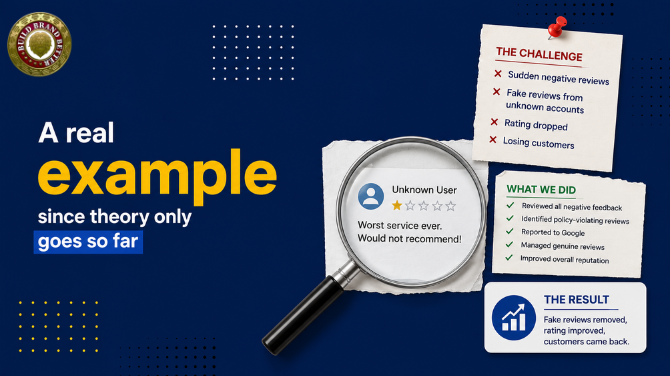
Then there’s the online side of it, and this is the part that drags on forever. A crisis can be “over” in real life, and the headline about it is still sitting on page one of Google six months later. Someone searches your business name, and there it is. This is honestly where most businesses get stuck because fixing that isn’t really a DIY thing, it takes tools and time, and some experience most internal teams just don’t have lying around.
And once things calm down, actually go back and look at it. What worked, what didn’t, what you’d change. Skip this, and you’re more or less setting yourself up to do this exact thing again at some point.
A real example since theory only goes so far
Airbnb during the pandemic is the one people bring up a lot, for good reason. Their whole business got hit almost overnight, and bookings basically vanished. What they did after is the interesting part. Refunds for millions of customers, plus a 250 million fund to help hosts who’d lost income. At the same time, they shifted their pitch toward local and longer stays, which actually made sense given that remote work was suddenly everywhere. Leadership kept talking, regularly, to hosts and guests and investors, even through layoffs, which is not an easy thing to do well. They still managed to go public by the end of that same year, which, given where things started, is kind of wild.
Nobody’s expecting a small business to set up a quarter-billion-dollar fund, obviously. The actual takeaway is smaller. Move fast, be straight with people, and be willing to actually change something about how you operate instead of just waiting for normal to come back.
Quick note on crisis communication vs crisis management
These get used like they’re the same thing, and they’re really not. Crisis communication is just the talking part, statements, posts, and press releases. Crisis management is the whole machine underneath that, operations, legal, money decisions, HR, all of it. Communication lives inside management, not the other way around, even though a lot of agencies sell communication services and call it the whole solution.
| Crisis management | Crisis communication |
| The whole plan, everything | Just the messaging |
| Prevention, response, recovery | What you say and how |
| Ops, legal, HR, finance, PR | Statements, posts, releases |
You can write a beautiful statement and still lose the business if nobody fixes the actual operational mess underneath it.
How long does this take, realistically?
Depends how bad it was, but there’s a rough shape to it. Small shifts, like sentiment or rankings starting to move, usually show up somewhere in months one to three. The bigger, more obvious stuff tends to land around months three to six. A full rebuild, especially after something like a real data breach or a proper scandal, can run six to twelve months, and that’s with consistent work the whole time, not occasional effort. Anyone telling you they can fix this overnight is probably not being totally straight with you, just so you know.
Businesses that had even a rough plan sitting somewhere before the crisis hit tend to come out of it faster than the ones starting completely from scratch mid-panic. Makes sense when you think about it.
Why is this hard to do alone?
You’re already running a business, that’s a full-time job on its own. Now add a crisis, and you’re handling customer questions, staff, maybe legal stuff, and your online reputation, all at once, while still trying to keep things running normally. Most internal teams just aren’t set up for this kind of pressure because it’s not what they were hired for in the first place.
This is the gap an outside crisis management team fills, and it’s the space Build Brand Better works in. They’re based in Dwarka, New Delhi, and they handle crisis management and online reputation work for businesses and individuals, and not just in India either; they’ve got clients across the US, UK, UAE, and a few other countries. Over 1200 clients at this point, and they’ve been mentioned in places like Forbes, CNBC, and the Economic Times along the way, for what that’s worth.
Their crisis management side covers four main things. Reputation management, which is the messaging, PR, and social moderation piece. Media and communication handling, so bad press actually gets a response instead of just sitting there. Corporate crisis response, for the messier internal stuff like breaches, staff issues, or financial trouble. And social media crisis handling, since that’s usually where things spin out fastest if nobody’s keeping an eye on it.
What I’d point out is that it’s not just strategy talk. They actually push down negative search results, work on getting harmful content removed where that’s possible, and rebuild a business’s image piece by piece rather than just handing you a slide deck of recommendations. If something’s already happening, or you’d rather just have something in place before it does, there’s a free consultation page, or you can call them directly at +91 99716 87251.
If you’re in the middle of this right now:
Short version, because you might not have time for the long one.
Stop whatever’s making it worse first. Get your facts straight before saying anything publicly; wrong info now costs you more later. Talk to the people affected fast, don’t sit around polishing a statement nobody’s waiting for. Write down what happened and what you’re changing; you’ll want that record later, even if it feels pointless right now. And if your reputation online is taking the hit, get someone who actually does this for a living instead of trying to learn search suppression on the fly while also running your business at the same time.
A crisis isn’t the end of anything, even though it really feels that way while you’re in it. Plenty of businesses have come out stronger than they went in. The ones that do, almost always, move fast and tell the truth the whole way through. That’s really most of it.
